
01The void
Before image, there is matter.
60 cabinets adrift in the dark, holding 10,368,000 emitters between them. Not one of them is switched on, and nothing here yet suggests a 6.0-metre surface.
Scroll to build it
Direct-view LED · Johannesburg
Watch 60 cabinets become more than ten million points of light—then specify the wall to the same published, measured numbers we ship. No mystery between the spectacle and the engineering.
60 cabinets adrift in the dark, holding 10,368,000 emitters between them. Not one of them is switched on, and nothing here yet suggests a 6.0-metre surface.
Scroll to build it
A blue die is a tenth of a millimetre across and costs a fraction of a cent. Persuading ten million of them to agree on what white looks like — at the same brightness, for the same decade — is the entire product.
Binned to ±2% ΔE at source
60 cabinets, each located by a machined datum rather than by eye. A wall should not need aligning once it is hung. It should arrive aligned and stay that way through the building's first summer.
60 cabinets · 340 kg · 12.1 m²
Cabinet-to-cabinet flatness is the number that decides whether you are looking at a display or at a patchwork of slightly disagreeing rectangles. It is also the number almost nobody prints. Ours is ±0.1 mm, and we will send you the measurement report for your cabinets, not a representative sample.
±0.1 mm — measured per cabinet, shipped with the wall
10,368,000 emitters reach drive current independently, in the order the receiving cards resolve them. What you are watching is the commissioning sequence, at the speed it actually happens.
6 processor ports · 8.7 Gbps · 14-bit
Cabinets tile in both axes with no seam budget to spend. Three metres or thirty. Flat, curved to ±15°, wrapped around a column, or turned on its side as a ribbon above a concourse. The wall ends where the architecture does.
3,200 × 1,080 px at this size
Flip-chip COB puts every die beneath a single plane of resin. There is no lens standing proud to catch a shoulder, a flight case or a raking sunbeam. You can put a fingertip on it, and then wipe the fingerprint off.
Monolithic resin · IK09 · cleanable
On a Nano cabinet each emitter is driven at 16-bit depth and refreshed at 7,680 Hz. On camera that means no banding, no scan line and no rolling bar at any shutter a broadcast crew will use. It is not a setting you enable. It is the driver architecture.
7,680 Hz visual refresh · 3,840 Hz is the industry floor
The best wall we have delivered is one that nobody in the building can describe. They do not mention the display. They say the room feels larger than it did, and they are not sure why.
2.1 kW average draw · 6,505 kWh/year
Give us a width, a viewing distance and an ambient light level. We will give you the pitch, the power, the mass, the port count and the bill of materials — with the reasoning for each, so you can argue with it.
No form gate. The configurator is on this site.
First light, at 40 mm
A Nano cabinet reaching drive current, shot on a macro lens. Each emitter is addressed independently — what looks like a fade is ten million separate decisions arriving a few microseconds apart.
Most manufacturers describe every product as suitable for everything. Each page below opens with what the series is for and closes with what it is not for, because a wall specified into the wrong room is a decade-long mistake.
Close enough to touch. Still no pixels.
The wall that runs for a decade and is never mentioned again.
Eighteen trucks. Forty cities. One tool.
Rated for weather it will probably never see.
These are not obscure. Every manufacturer measures all four. They are simply inconvenient, so they end up in the sales conversation instead of the datasheet.
Rarely published
±0.1 mm
Decides whether the wall reads as one surface or as a grid of rectangles catching light at slightly different angles.
Almost never published
480 nits @ 40%
Walls run at 30–50% drive to protect LED half-life. The headline peak figure is not what the room will ever see.
Usually unqualified
12,000:1 @ 100 lux
A contrast ratio measured in a blacked-out lab describes a room nobody works in.
Hidden behind the brand name
Gold bin, stated
Same brand name on the sheet, materially different brightness retention at year five.
Ten cabinets by six, P1.875. Every figure below is produced by the same model the configurator runs — nothing on this page is a rounded marketing number.
12.15 m² · 60 cabinets
carries DCI 2K 1:1
pixels merge fully at 6.4 m
27 A peak at 230 V — size the breaker on this
structural load before mounting hardware
give this number to the mechanical engineer
8.7 Gbps at 60 Hz
10 h/day, 6 days/week, 40% drive
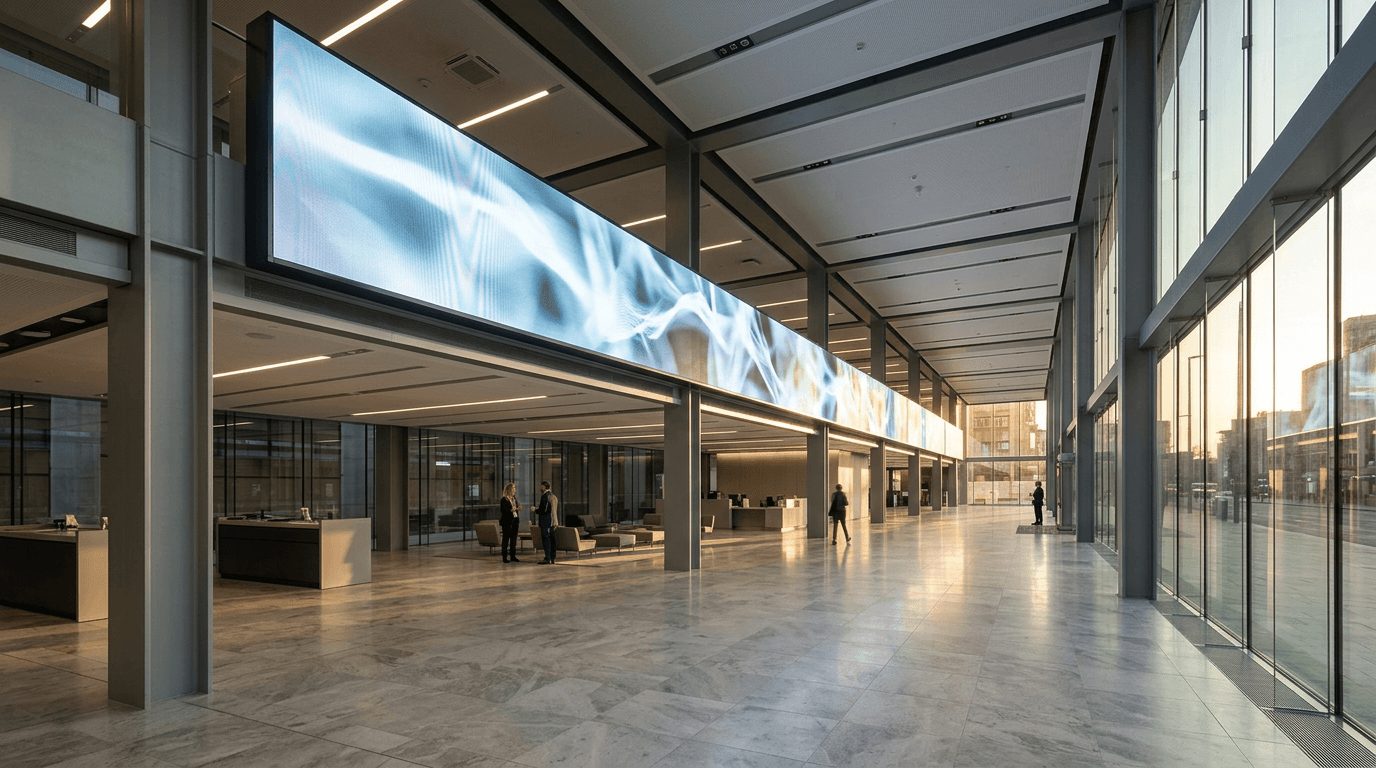
Commercial lobby
A 14-metre ribbon above a banking hall with full-height west glass — the hardest ambient condition an indoor wall can be given.
14.4 × 2.7 m · Core P1.875 · 1,500 nits
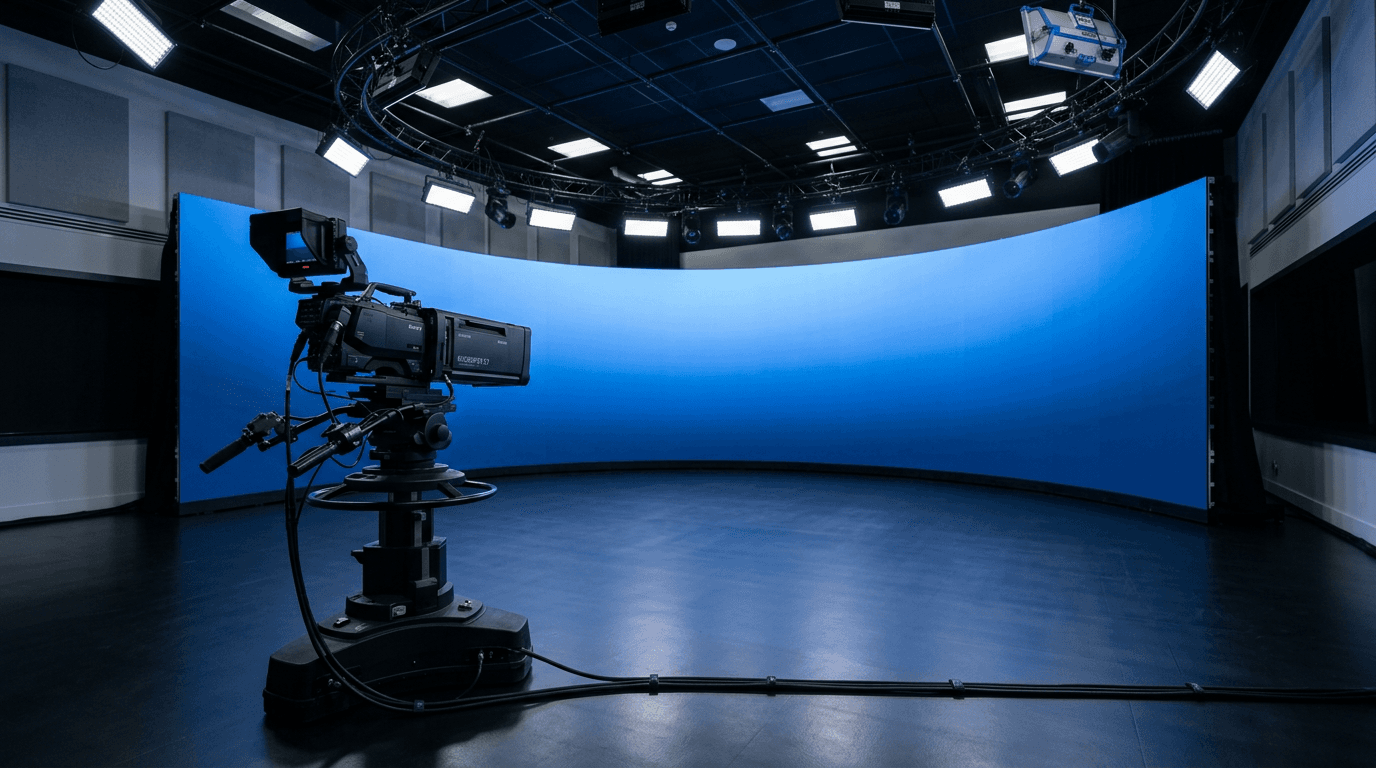
Broadcast
A 9-metre curved cyclorama for live news, shot at 1/2000 s with cameras as close as 1.4 metres.
9.0 × 3.4 m · Nano P1.25 · 7,680 Hz

Transport
Sixteen passenger-information faces across a concourse, driven as one canvas and readable at 40 metres.
16 faces · Beacon P4.8 · IP66
A width, a viewing distance, an ambient light level. You will get the pitch, the power, the mass and the port count — with the reasoning attached, so you can argue with it before anyone quotes you.